Sendmarc
Anyone can send email using your company name. Until you stop them.
By default, nothing prevents a stranger from sending mail that appears to come from your domain. Your customers, suppliers, and staff have no way to tell the difference. DMARC fixes that, and Sendmarc handles getting you to full enforcement without breaking the legitimate mail your business depends on.
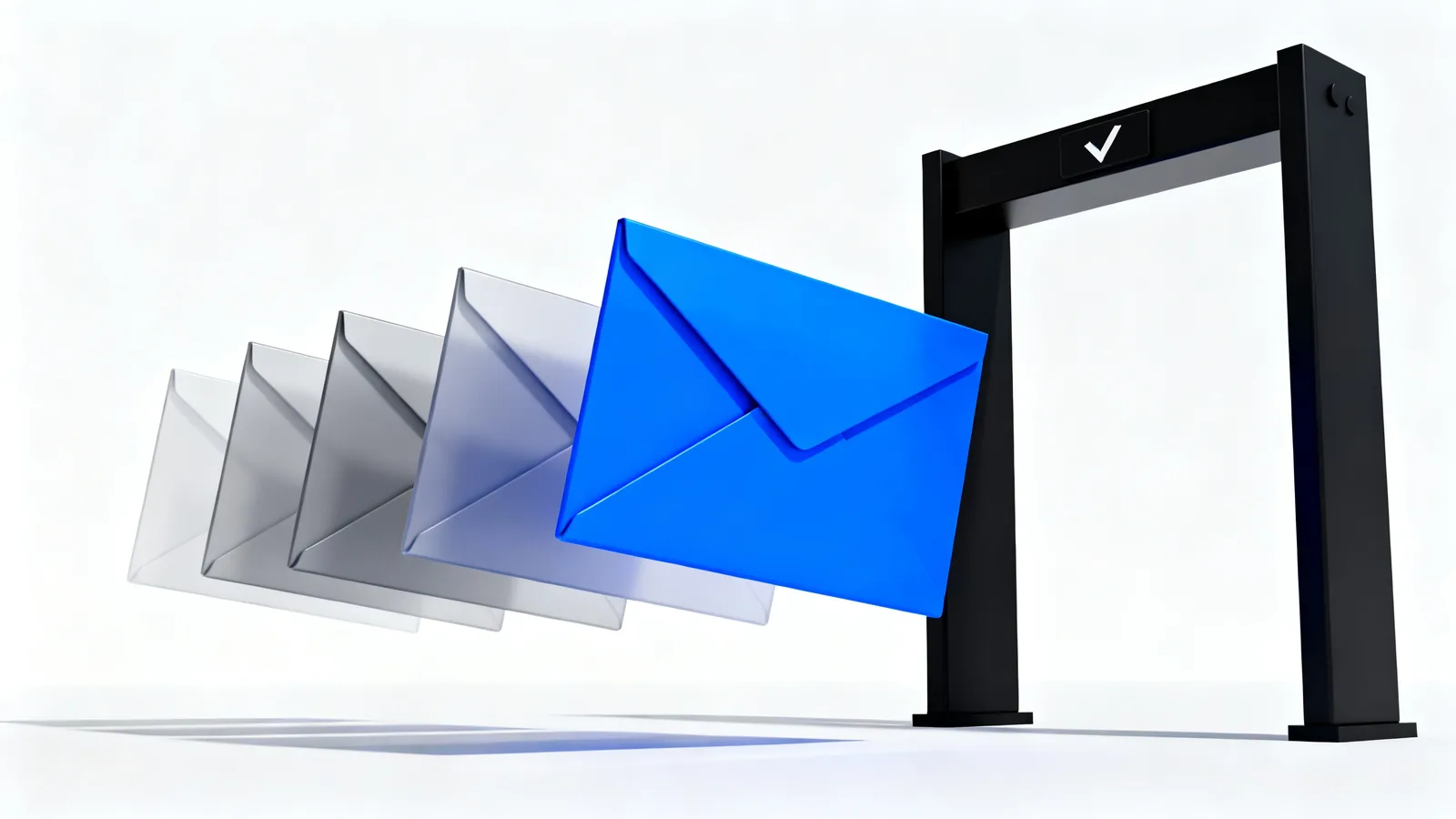
Impersonation does not require breaking into anything
An attacker does not need access to your systems to send email as your company. Without authentication in place, the internet takes their word for it, and the fraud arrives carrying your name and your reputation.
Invoice fraud in your name
A message to your customer, apparently from you, with new bank details. They pay it because everything about the sender looks correct, and the damage lands on your relationship.
Reputation you cannot defend
Every spoofed message sent to the outside world using your domain erodes trust in your real mail, and you have no visibility that it is even happening.
Legitimate mail landing in spam
Unauthenticated domains are treated with suspicion. Your invoices, quotes, and notifications quietly stop arriving, and nobody tells you.
The part where most DMARC projects stall
Turning DMARC on is easy. Turning it to full enforcement without blocking your own mail is the hard part, because almost every business sends through more services than it realizes: the CRM, the invoicing tool, the marketing platform, the helpdesk. Miss one and its mail starts vanishing.
Watch and learn
Reporting is switched on and nothing is blocked. Every source sending as your domain is discovered, including the ones nobody remembered.
Tighten carefully
Authorized senders are aligned and unauthenticated mail begins going to spam instead of the inbox, with the reports watched closely for anything legitimate caught by mistake.
Full protection
Mail that fails authentication is refused outright. Only then is your domain genuinely protected, and this is the state most businesses never reach on their own.
Authentication is more than one DNS record
DMARC depends on SPF and DKIM being correct and staying correct, and both have limits and maintenance burdens that quietly break protection over time.

Policy management and monitoring
Continuous reporting on every source sending as your domain, with the policy advanced deliberately toward full rejection. Monitoring does not stop at enforcement, because a new marketing tool added next quarter can undo it without anyone noticing.
SPF management and flattening
SPF silently breaks once a domain exceeds ten DNS lookups, a limit most businesses cross without realizing. Flattening keeps the record valid as services are added.
DKIM hosting and rotation
Signing keys are hosted and rotated on schedule, which is a security requirement almost nobody performs manually because it is easy to forget and awkward to do.
BIMI implementation
Once at enforcement, your verified logo can appear beside your messages in supporting mailboxes, turning authentication into something recipients can actually see.
MTA-STS and TLS-RPT
Enforces encrypted delivery between mail servers and reports when it fails, closing the gap where mail could otherwise be intercepted in transit.
Lookalike domain defense
DMARC protects your exact domain. Attackers respond by registering one that differs by a character, so similar domains are monitored and surfaced too.
Your name stops being available to strangers
Impersonation stops working
At full enforcement a spoofed message using your domain is rejected before delivery, which removes the mechanism most invoice fraud aimed at your customers depends on.
Your real mail arrives
Properly authenticated domains are treated as trustworthy, so quotes, invoices, and notifications stop being filtered into spam folders unseen.
Requirements already met
Major mailbox providers now require authentication from bulk senders, and insurers and enterprise customers increasingly ask about it directly.
This is DNS, and DNS mistakes are loud
Email authentication is unusually unforgiving. A misconfigured record does not degrade quietly, it stops your invoices from reaching customers. That risk is exactly why so many businesses switch DMARC on in monitoring mode, get nervous, and leave it there permanently, which provides visibility and no actual protection.
Left in monitoring mode
The common outcome when nobody owns the project.
- Reports arrive and nobody reads them
- Policy never advances past p=none
- Spoofing continues exactly as before
- A new sending service silently breaks alignment
Driven to enforcement by NYN Impact
Someone owns it, watches it, and finishes it.
- Every legitimate sending source found and authorized first
- Policy tightened in stages with reports checked at each step
- SPF kept under the lookup limit as services change
- Alignment re-verified whenever a new tool is added
Built for any business with a domain worth copying
Businesses that invoice by email
Where a spoofed message with altered payment details would be believed by a customer, because it carries a domain they already trust.
Recognizable brands
Where the company name itself carries enough weight that impersonating it is worth an attacker's time and effort.
Regular senders of bulk mail
Where deliverability is commercially important and mailbox providers now require authentication before treating your mail as legitimate.
Proof that mail from you is actually from you
Sendmarc implements and maintains DMARC, SPF, and DKIM, advancing your domain from monitoring to full enforcement so mail impersonating your business is rejected before delivery. It adds SPF flattening, DKIM rotation, BIMI, MTA-STS and TLS-RPT enforcement, lookalike domain defense, and continuous monitoring, so protection holds as the services your business sends through keep changing.
Get in touch with NYN Impact
Questions about this solution? Reach us directly.